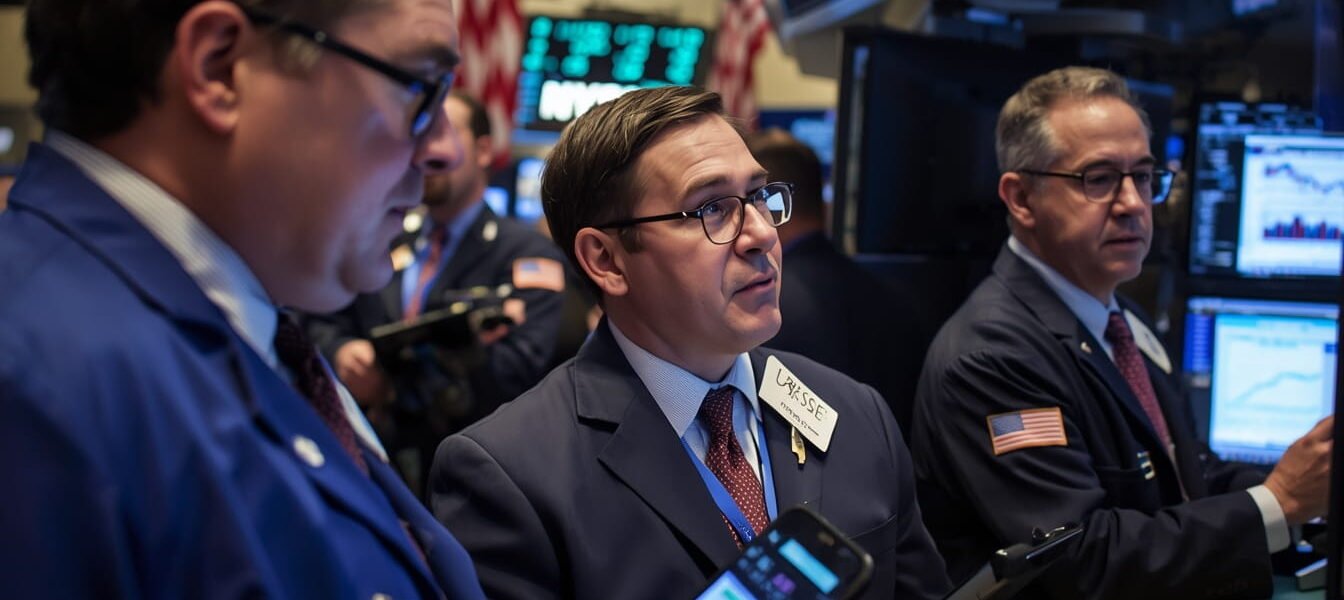

On January 16, 2026, the financial markets around the world were rocked by midday volatility after an unexpected signal from the Federal Reserve came as an out-of-the-blue alert to investors.
The signal, contained in a regular economic update, indicated that interest rates could change as inflation increased, leading to a swift reaction in the key indices. Investors on Wall Street and elsewhere rushed to reallocate their investment portfolios, resulting in some wins and some losses that highlighted the precarious position of the post-pandemic economy.
Subtle Hint by Federal Reserve Stokes Frenzy
The day opened in relative calm, as early trading was optimistic following recent technology-sector earnings reports. At midday, however, in Eastern Time, the Fed posted a supplemental note on its website, implicitly implying that quantitative easing operations could be scaled back earlier than expected.
Analysts saw this as a reaction to ongoing supply chain disruptions and geopolitical tensions in Eastern Europe, which have been pushing up commodity prices. This surprise reversal of the central bank’s dovish policy triggered automated trading algorithms, which heightened the market’s reaction.
The stock market was highly volatile across major industries. The S&P 500 dropped to 1.2%, but later recovered to end the midday session 0.8% higher, with fresh interest in defensive stocks such as utilities and consumer staples.
In the meantime, the Nasdaq Composite experienced more pronounced moves, dropping as much as 2.5% during sell-offs in high-growth technology companies and then levelling off. Investors cited the Fed’s words on adaptive monetary policy as the tipping point, and some even speculated that it pre-empted the next policy rate increase.
International Investment and Investor Plans
The spillover effect was felt in international and European markets, such as the FTSE 100 and the DAX indices, reflecting the uncertainty. Futures contracts on the Nikkei and Hang Seng indicated opening losses in Asia, where trading had already ended, as traders expected fallout from developments in the U.S. The currency markets were not left behind; the U.S. dollar rose against the euro and the yen amid a flight to safety amid confusion.
Experienced investors perceived that the episode was a test of the market’s strength. Inflation-hedged assets like gold and real estate investment trusts were adopted by hedge funds and institutional players in quick succession. The volatility was also driven by retail investors who could place quick buy-and-sell orders through mobile trading apps. Financial consultants were cautious, insisting on diversified portfolios amid unpredictable central bank communications.
Economic Projections and Future
This midday response points to greater economic fears. The Fed’s signal of overheating concerns stems from the fact that the unemployment rate currently stands at 3.5% and consumer spending is healthy. Economists assume that if next week’s inflation data is stronger than expected, more drastic actions may be implemented, which might reduce growth in new sectors such as renewable energy and AI.
Later in the trading day, sentiment changed to nervous optimism. In the early afternoon, the volumes shot up, which means that many viewed the dip as a buying opportunity. The occasion, however, is a reminder that one particular, unexpected event can destroy strategies. Investors will be keen on clarifications by the Fed Chair, Elena Ramirez, in future statements, with the hope of the global economy stabilising in the highly interconnected economy.
Overall, whether one analyzes the market trends today, one will understand how vulnerable the policy indications and investor trust can be. Although the frenzy has calmed down in the short run, the long term outcomes may transform the investment horizons months later.